Hanson O'Haver
Writer, copywriter, and editor based in New York
Email CopywritingPieces I’ve written:
-
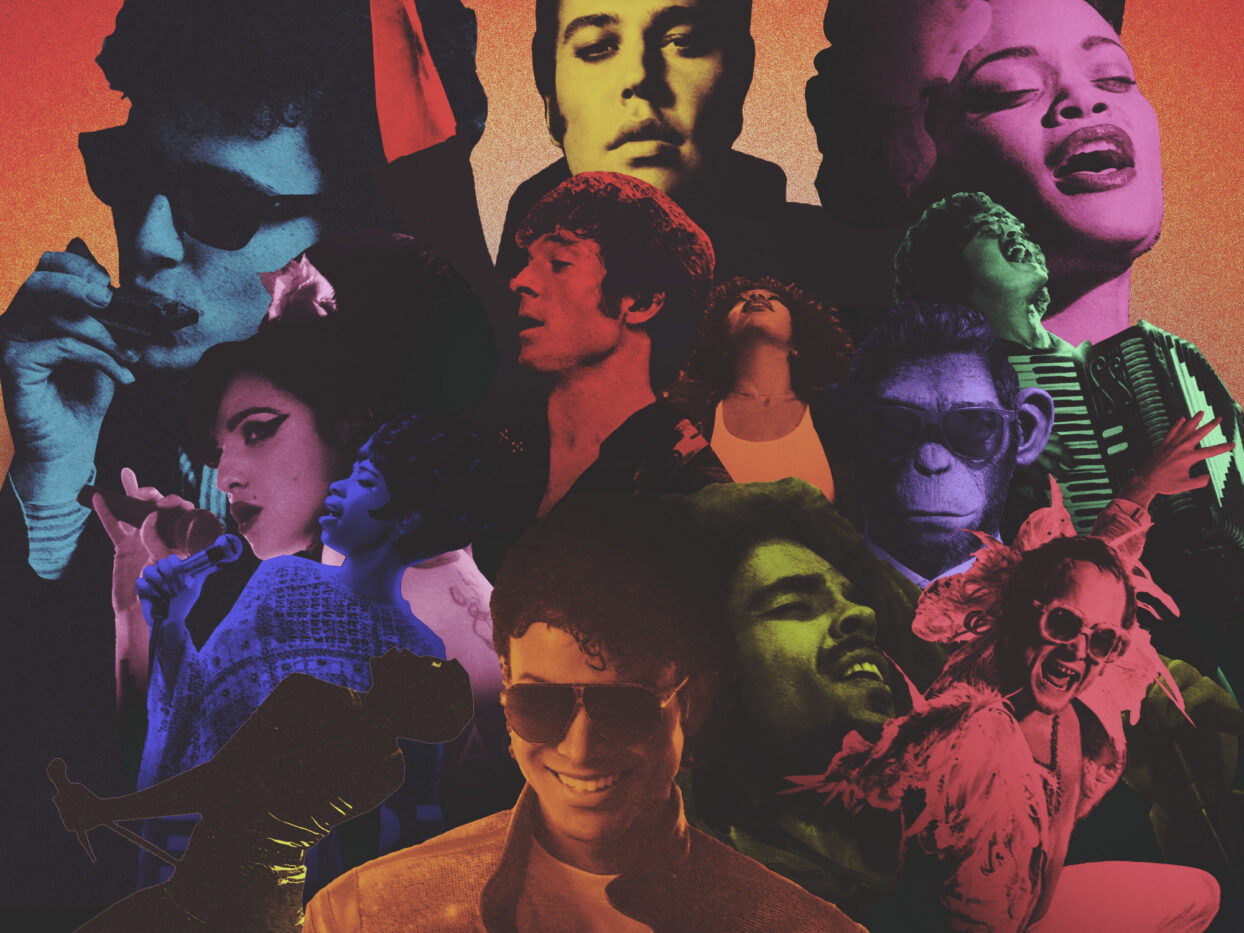 Broken Records | The Drift
It can be tough to remember now, but there was once a time when people had to outgrow superheroes. Fortunately, for generations of kids entering puberty, there was another place to turn for flashy costumes, goofy nicknames, personal logos, and childhood hardships channeled into special abilities by beloved figures who played by their own rules: rock ’n’ roll. When “famous musician” replaced “Batman” as the answer to the question “What do you want to be when you grow up?” it wasn’t just about sex and drugs. For the back half of the twentieth century, musicians represented a self-made ideal, as seen through Ray-Ban colored glasses. These stars were rebellious freethinkers who maintained a steadfast belief in their talent — and their novel ideas — when everyone else doubted them. Their genius was recognized with rewards so vast that they spawned new demons to battle, thus fueling another cycle of creativity and adoration.
So it’s fitting that, as Hollywood has increasingly turned to I.P. fare — churning out a seemingly endless stream of movies rehashing familiar plotlines and featuring recurring characters — studio executives have set their sights on the major label cinematic universe.
Broken Records | The Drift
It can be tough to remember now, but there was once a time when people had to outgrow superheroes. Fortunately, for generations of kids entering puberty, there was another place to turn for flashy costumes, goofy nicknames, personal logos, and childhood hardships channeled into special abilities by beloved figures who played by their own rules: rock ’n’ roll. When “famous musician” replaced “Batman” as the answer to the question “What do you want to be when you grow up?” it wasn’t just about sex and drugs. For the back half of the twentieth century, musicians represented a self-made ideal, as seen through Ray-Ban colored glasses. These stars were rebellious freethinkers who maintained a steadfast belief in their talent — and their novel ideas — when everyone else doubted them. Their genius was recognized with rewards so vast that they spawned new demons to battle, thus fueling another cycle of creativity and adoration.
So it’s fitting that, as Hollywood has increasingly turned to I.P. fare — churning out a seemingly endless stream of movies rehashing familiar plotlines and featuring recurring characters — studio executives have set their sights on the major label cinematic universe.
-
 The Place Where Millennials Go to Die | The Nation
The first time I visited the city, I was told about a tote bag that says “Berlin: If you can’t make it here, you can’t make it anywhere.” With cheap rents, cheaper food, bars you can still smoke in, the world’s coolest nightclub, cafés on every street corner, respected art galleries both indie and blue-chip, the German capital became the last great bohemian hope. It’s the rare place where money doesn’t seem to be the primary motivating factor behind every decision that hasn’t fallen into irrelevance. There are squats and grand cathedrals stained by centuries of dirt, and vintage shops that open for a few hours in the afternoon, if you’re lucky. But then there’s also a Supreme store. During the Merkel era, hordes of the international creative class moved to the city, first from continental Europe and then the Anglosphere. They came in search of a better life, of leisure and relevance and the freedom to pursue a career in the arts, or at least something adjacent. Two such dreamers are Anna and Tom, the subjects of Vincenzo Latronico’s new novel, Perfection.
The Place Where Millennials Go to Die | The Nation
The first time I visited the city, I was told about a tote bag that says “Berlin: If you can’t make it here, you can’t make it anywhere.” With cheap rents, cheaper food, bars you can still smoke in, the world’s coolest nightclub, cafés on every street corner, respected art galleries both indie and blue-chip, the German capital became the last great bohemian hope. It’s the rare place where money doesn’t seem to be the primary motivating factor behind every decision that hasn’t fallen into irrelevance. There are squats and grand cathedrals stained by centuries of dirt, and vintage shops that open for a few hours in the afternoon, if you’re lucky. But then there’s also a Supreme store. During the Merkel era, hordes of the international creative class moved to the city, first from continental Europe and then the Anglosphere. They came in search of a better life, of leisure and relevance and the freedom to pursue a career in the arts, or at least something adjacent. Two such dreamers are Anna and Tom, the subjects of Vincenzo Latronico’s new novel, Perfection.
-
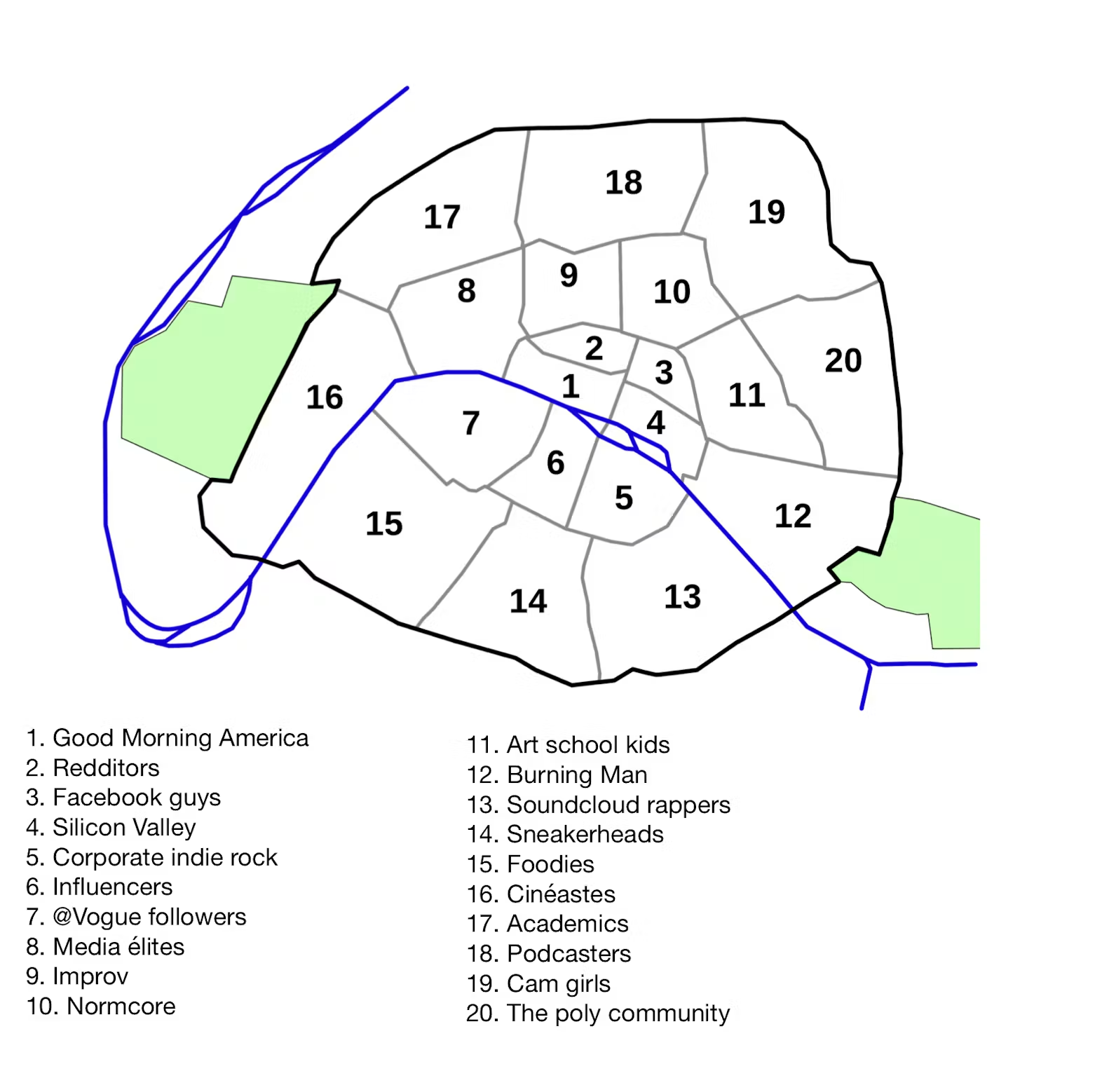 The Great Irony-Level Collapse | Gawker
I’ve always known fashion wasn’t just a straight line, with “in style” at one end and “out of style” at the other. I had heard it might be a circle. Once something goes far enough out of trend, it starts to be cool again. Inseams ebb and flow; monochromatic severity gives way to garish prints; sometimes it’s good to look like a lumberjack, but other times it’s better to be a jogger. Skinny jeans and “in style” may be approximately antipodal points today, but that only means tight pants are almost ready to start happening again. This same cycle holds beyond clothes: one generation sells their guitars to buy turntables, and the next sells their turntables for guitars. People — consisting of clothes and interests and consumption and output — could be plotted onto this circle, too.
Normcore, and its cultural equivalent, poptimism, complicated matters. If everyone is wearing tennis shoes and parent jeans and listening to Beyonce, how do you know who’s cool?
The Great Irony-Level Collapse | Gawker
I’ve always known fashion wasn’t just a straight line, with “in style” at one end and “out of style” at the other. I had heard it might be a circle. Once something goes far enough out of trend, it starts to be cool again. Inseams ebb and flow; monochromatic severity gives way to garish prints; sometimes it’s good to look like a lumberjack, but other times it’s better to be a jogger. Skinny jeans and “in style” may be approximately antipodal points today, but that only means tight pants are almost ready to start happening again. This same cycle holds beyond clothes: one generation sells their guitars to buy turntables, and the next sells their turntables for guitars. People — consisting of clothes and interests and consumption and output — could be plotted onto this circle, too.
Normcore, and its cultural equivalent, poptimism, complicated matters. If everyone is wearing tennis shoes and parent jeans and listening to Beyonce, how do you know who’s cool?
-
 The Year of the Auteur Novel | The Drift
At this point, the novel is probably placed at the pinnacle of cultural production. What other medium could it be? The visual arts feel too conceptual, too arbitrary, too much like a tool for laundering money; poetry is the same, minus the money; symphonies and ballet are for oligarchs and people who remember the 1940s; pop music is for children; Hollywood has long been the dominating force in American life, but the industry’s focus has always been on attracting the largest audience possible, with quality a distant afterthought. It’s curious that, at a time when public appetite for literature seems as low as ever, four of Hollywood’s most commercially successful auteurs (or most artistically successful box office draws, depending) have decided to give writing novels a shot. The trend is a funny rejoinder to that old punchline, “But what I really want to do is direct.”
The Year of the Auteur Novel | The Drift
At this point, the novel is probably placed at the pinnacle of cultural production. What other medium could it be? The visual arts feel too conceptual, too arbitrary, too much like a tool for laundering money; poetry is the same, minus the money; symphonies and ballet are for oligarchs and people who remember the 1940s; pop music is for children; Hollywood has long been the dominating force in American life, but the industry’s focus has always been on attracting the largest audience possible, with quality a distant afterthought. It’s curious that, at a time when public appetite for literature seems as low as ever, four of Hollywood’s most commercially successful auteurs (or most artistically successful box office draws, depending) have decided to give writing novels a shot. The trend is a funny rejoinder to that old punchline, “But what I really want to do is direct.”
-
 A Crime and a Pastime | The Baffler
People came to California for gold or agriculture or loansharking or, later, to get famous, and by late 1962 it was the most populous state in the country. And it was there, around that time, on the blacktop schoolyards of coastal suburbs, that a sport and pastime uniquely suited to the American ethos blossomed: skateboarding. The frontier sought by so many was gone, it’s true, but the frontierist’s mindset remained. What business of yours is it if my friends and I want to grind on the painted curb behind the grocery store? Leave us alone. The curb became, for the skater, a fancifully deregulated zone imbued with limitless possibilities—and therefore a kind of freedom, so long as he could be left alone in his pursuits.
A Crime and a Pastime | The Baffler
People came to California for gold or agriculture or loansharking or, later, to get famous, and by late 1962 it was the most populous state in the country. And it was there, around that time, on the blacktop schoolyards of coastal suburbs, that a sport and pastime uniquely suited to the American ethos blossomed: skateboarding. The frontier sought by so many was gone, it’s true, but the frontierist’s mindset remained. What business of yours is it if my friends and I want to grind on the painted curb behind the grocery store? Leave us alone. The curb became, for the skater, a fancifully deregulated zone imbued with limitless possibilities—and therefore a kind of freedom, so long as he could be left alone in his pursuits.
-
 We Were Supposed to Be Living in Pod Houses | The Outline
Pretend it’s the ’60s and you’ve been tasked with building the house of the future. You might ask yourself, What’s the most futuristic thing imaginable? Space. Who lives in space? Aliens. What do their houses look like? Flying saucers. And so your prediction might look a lot like the Futuro house, a prefabricated plastic ellipsoid with porthole windows and a fold-down staircase that bears a striking resemblance to a child’s drawing of a UFO.
We Were Supposed to Be Living in Pod Houses | The Outline
Pretend it’s the ’60s and you’ve been tasked with building the house of the future. You might ask yourself, What’s the most futuristic thing imaginable? Space. Who lives in space? Aliens. What do their houses look like? Flying saucers. And so your prediction might look a lot like the Futuro house, a prefabricated plastic ellipsoid with porthole windows and a fold-down staircase that bears a striking resemblance to a child’s drawing of a UFO.
More writing:
• A review of Yesterday, the forgotten 1935 novel by Chilean surrealist Juan Emar• An ode to Mitt Romney’s phrase about Michigan, where “the trees are the right height”
• New York City: We LIKE that it sucks
• A review of Jordan Castro‘s millennial male novel The Novelist
• A review of Sean Thor Conroe‘s millennial male novel Fuccboi
• New York City: We LIKE that it sucks
• The metaverse is for babies
• An oral history of Transworld Skateboarding Magazine
• “Fast fashion” furniture has given us a world of crappy couches
• The future has a face tattoo
• Why are all my friends wearing their shirts too small?
• A brief history of skateboarders smoking cigarettes while skateboarding
• Remembering Clear Channel‘s post-9/11 do-not-play list
• A profile of novelist Richard Ford
• Breaking down the on-screen relationshop of Tom Cruise and Nicole Kidman